The record
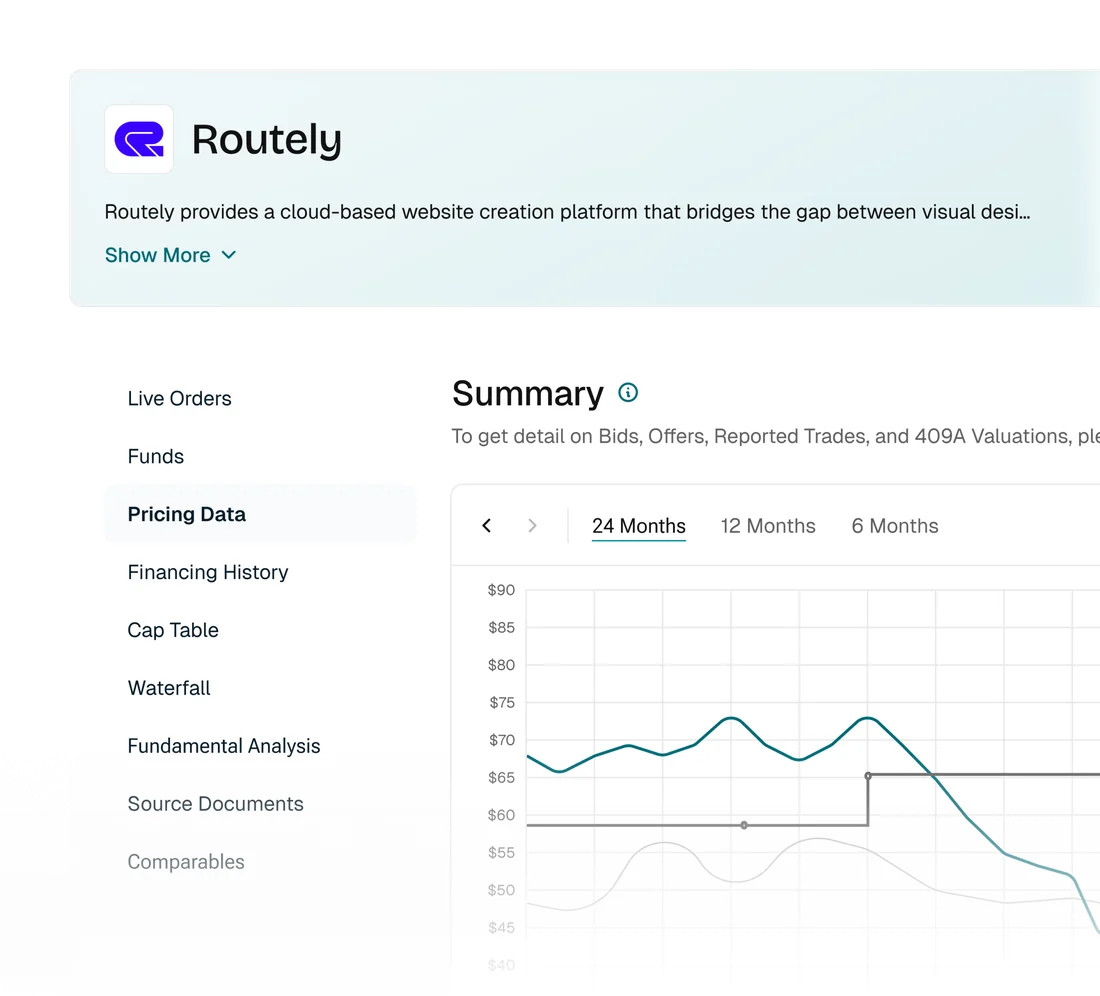
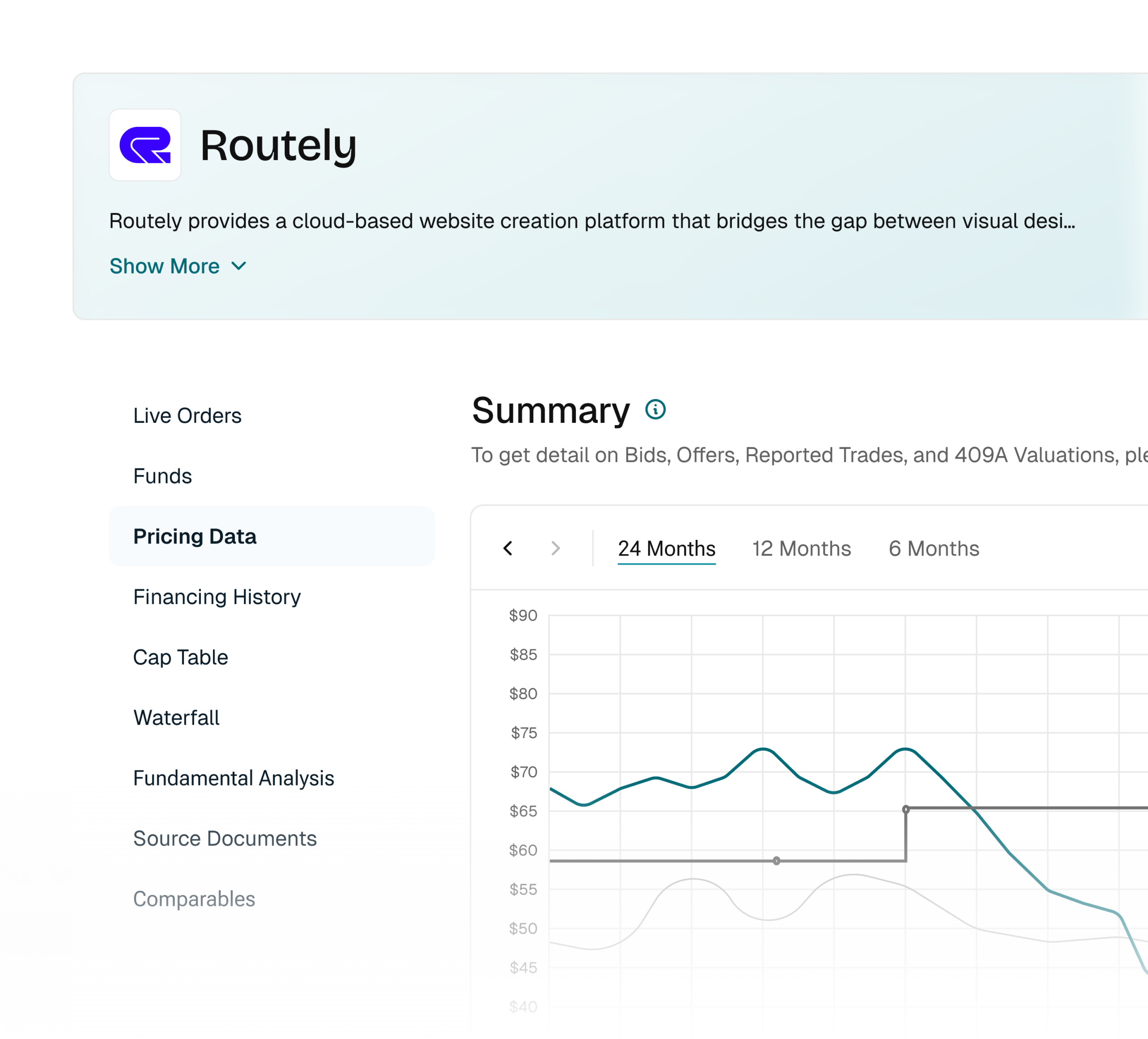
Two platforms publish a daily private-share price, and both describe it as a calculated estimate rather than a trade record. Forge Price, as retrieved on 16 September 2026, is defined by Forge as a derived, indicative price, calculated daily for roughly 200 pre-IPO companies, that synthesizes secondary trades, recent funding rounds and indications of interest on Forge's own marketplace. Nasdaq Private Market's NPM Price describes itself the same way: a proprietary methodology that estimates a company's current price per share from primary financing rounds, executed secondary trades, bid and offer activity, 409A valuations and mutual fund marks, layered with macro indicators.
What the sources establish
Neither price is a single transaction. Both platforms state that they blend several inputs, including a company's last priced round, actual trades on their own marketplace, and standing bids and offers, into one daily figure. That is a meaningful difference from a financing round, where a single investor and company agree a price for a specific number of shares on a specific date. A secondary platform's number moves with buyer and seller interest even when no primary round has happened. Separately from either pricing service, company-run liquidity events are a third channel: Carta reported in April 2026 that 16,538 employees sold equity through tender offers in 2025, the highest annual figure in its data, out of roughly one million employees on its platform.
Scope and revision
Both pricing services limit their own coverage: Forge Price covers about 200 companies, and NPM's methodology page likewise restricts itself to actively traded names rather than every private company. Neither service states that its price reflects a company's next funding round, only that it aggregates available signals about current demand. A tender offer, by contrast, is a discrete event initiated by the company itself, priced for that transaction alone, and Carta's tender-offer figures describe only activity on its own cap-table platform, not the market as a whole.
The decision in front of you
Editorially: an employee or investor citing a current price for a private company should ask which of these three mechanisms produced it, a continuous indicative price, a specific secondary trade, or a company-run tender, because each answers a different question about value.
- Is the cited figure a continuous indicative price, a single executed trade, or a tender-offer price?
- How many inputs does the pricing service disclose using, and how recent are they?
- Does the company itself endorse or participate in the transaction the price is drawn from?
A secondary price fills a real gap between financing rounds, but it is a synthesized estimate built for that purpose, not a substitute for the round itself. Reading the platform's own definition before quoting its number is the difference between citing a price and citing a guess dressed as one.
Sources & reading trail
Defines Forge Price as a derived, indicative daily price for about 200 pre-IPO companies, synthesized from secondary trades, recent funding rounds and platform indications of interest.
Source published: Not established · Retrieved: 16 September 2026
Defines the NPM Price as a proprietary methodology estimating current price per share from primary rounds, executed secondary trades, bid/offer activity, 409A valuations and mutual fund marks.
Source published: Not established · Retrieved: 16 September 2026
Reports the number of employees who sold equity in company-run tender offers in 2025 and the size of the platform population.
Source published: 6 April 2026 · Retrieved: 16 September 2026
Filings, provider reports and official documents establish the record; the scope reading and the decision framing are Venture Trace editorial analysis. This retrospective draft does not imply the site published on the event date.