The record
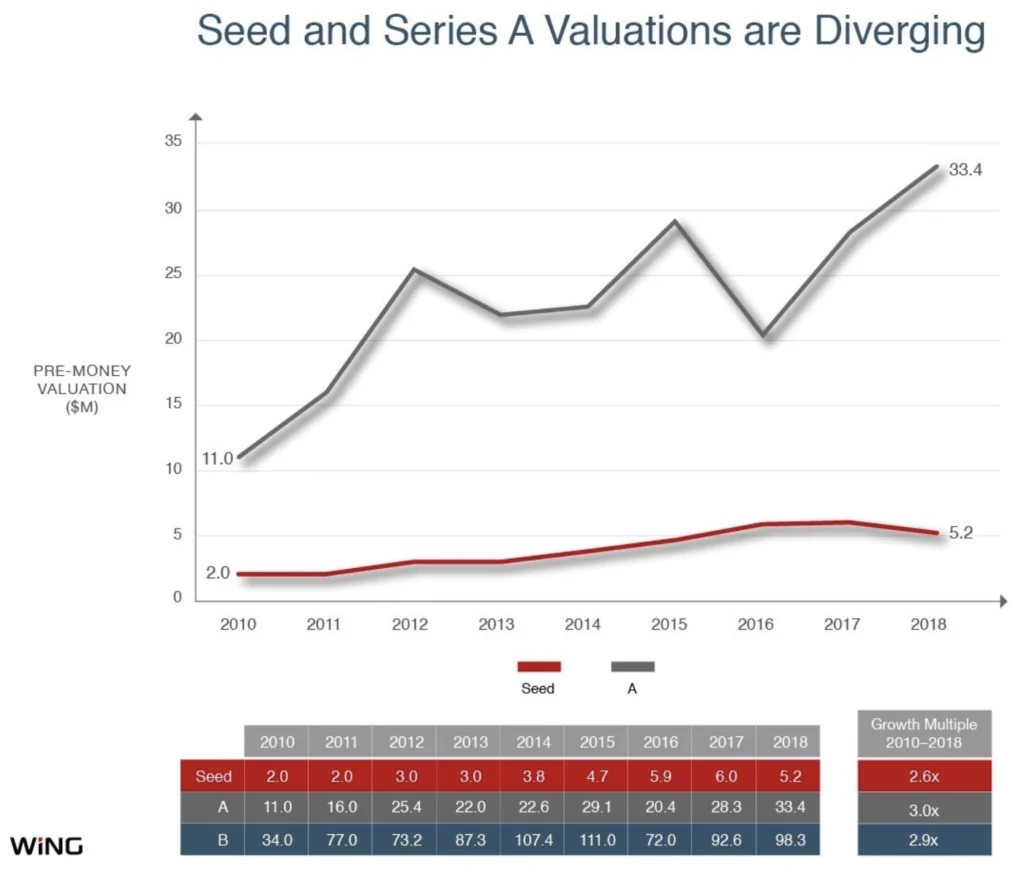
Carta's Insights team reported on 22 October 2025 that the median seed-stage post-money valuation on its platform rose from about $10 million in 2018 to about $20 million by 2025, while the 95th-percentile valuation rose faster, from $30.6 million to $80 million over the same stretch. A separate post, published 16 July 2025, found that median seed valuations in the first half of 2025 exceeded the prior 2022 peak in hardware, fintech, biotech, SaaS and healthtech, with consumer startups the one sector that did not follow the pattern.
What the sources establish
Carta is explicit that seed is not a term it applies by a fixed rule; the October post states there is no set definition and that the firm counts a round as seed based on "the literal round documents and share classes" a company itself chose. An earlier methodology post used a $1 million floor and found that the share of such rounds done as priced equity, rather than SAFEs or convertible notes, fell from 62% in 2020 to 35% by late 2023, meaning today's seed round is increasingly an instrument choice as much as a valuation band. The July 2025 post attributes part of the valuation rise to a related mechanism: the growth of a distinct pre-seed stage means companies are more developed by the time they raise what is labeled a seed round.
Scope and revision
Every figure here describes companies on Carta's own platform, self-labeled by the company at the time of filing, not a standardized regulatory or accounting category. The widening gap between the median and the 95th percentile, from roughly three times to four times, shows the top of the seed market moving faster than the middle, so a single median increasingly understates how expensive the most competitive rounds have become. None of these posts adjusts historical years for inflation, and none claims the pattern holds outside companies that use Carta.
The decision in front of you
Editorially: a founder or employee comparing a current seed term sheet to a number from a few years ago should treat the round label as unreliable on its own and look instead at the dollar amount, the valuation, and the instrument before assuming the comparison is like for like.
- Does the cited seed figure include SAFEs and notes, or priced equity only?
- Is the year-over-year comparison adjusted for how much the label itself has drifted?
- Is the relevant figure the median, or the top of the range that increasingly diverges from it?
A round name is chosen by the company raising it, not assigned by an external standard, and the sources here show that choice drifting upward for most of a decade. The dollar figures attached to seed are the more stable fact; the label is the part that has moved.
Sources & reading trail
States the 2018-to-2025 rise in median and 95th-percentile seed post-money valuations and that seed has no fixed definition.
Source published: 22 October 2025 · Retrieved: 16 September 2026
States that H1 2025 median seed valuations exceeded 2022 peaks in most sectors and links part of the rise to the separate pre-seed stage.
Source published: 16 July 2025 · Retrieved: 16 September 2026
States a $1 million cutoff methodology and that the share of seed-plus rounds done as priced equity fell from 62% to 35% between 2020 and 2023.
Source published: 2 October 2023 · Retrieved: 16 September 2026
Filings, provider reports and official documents establish the record; the scope reading and the decision framing are Venture Trace editorial analysis. This retrospective draft does not imply the site published on the event date.