The record
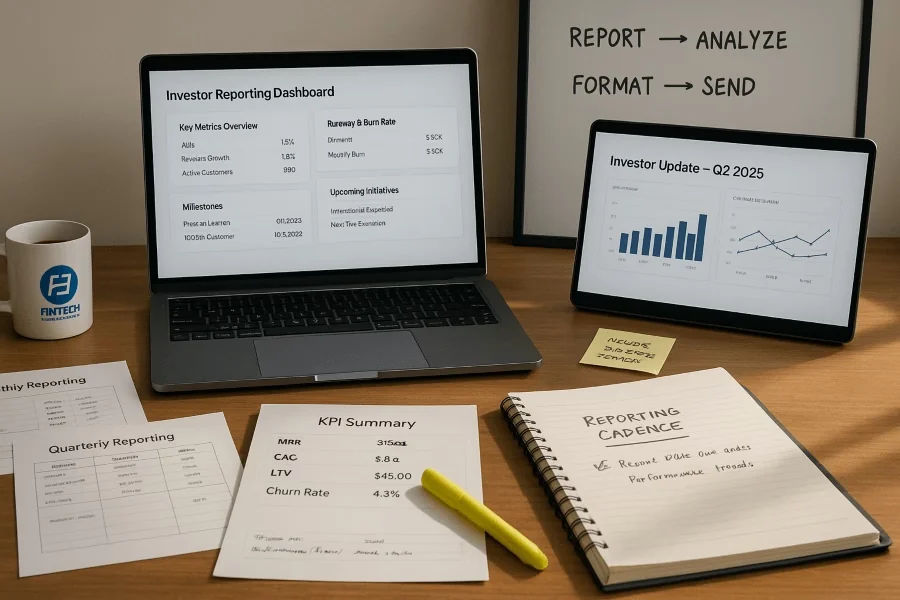
On 10 July 2025, Carta published a guide to writing investor updates, stating that most early-stage founders send them monthly, while growth and late-stage companies typically move to a quarterly cadence. The guide sets out five sections it says a typical update covers: highlights placed at the top rather than buried, financial performance including cash runway and burn rate, customer wins, key hires, and a specific 'asks' section where a founder tells investors how their networks could help.
What the sources establish
A comparable guide from the other side of the venture relationship, AngelList's guide to LP updates, published 6 April 2021, reports what fund managers told the platform about updating their own backers: a minimum cadence of once a quarter, delivered asynchronously by email or document rather than a live call, and led with whatever is most material rather than a chronological account. One fund manager quoted in the piece states a rule that reappears across both guides in different words: 'we give it to LPs straight, whether it's good or bad,' because a manager who reports only good news loses credibility over time. Carta's guide states the same principle for founders reporting to investors: don't just pick your best results, because investors will see through it.
Scope and revision
These two guides describe different relationships in the same capital chain: Carta's guide addresses a founder updating the investors in their own company, while AngelList's addresses a fund manager updating the limited partners in their fund, one layer further up. The cadence each recommends differs accordingly, monthly for an early-stage company against quarterly for a fund, and neither guide states that its cadence transfers to the other relationship. Both are the publishing platform's own guidance rather than a survey of what investors actually do, and both are framed as best practice rather than a documented requirement in any financing agreement.
The decision in front of you
As editorial guidance beyond what either source states as a rule, a founder can commit to one cadence and hold it, pick a small number of consistent metrics rather than whichever ones look best that month, and treat the update as a running record an investor can compare across periods rather than a one-off pitch.
- Is the same set of metrics being reported update after update, so trends are visible?
- Does the cadence match the company's actual stage, rather than being copied from a different one?
- Would this update read the same whether the month was good or bad?
Both guides converge on the same underlying claim: consistency and candor across many small updates build more investor trust than any single well-written one.
Sources & reading trail
States the recommended cadence by company stage and the five-section structure of a founder investor update.
Source published: 10 July 2025 · Retrieved: 16 September 2026
States fund managers' own reported cadence and candor practices for updating LPs, a comparable but distinct reporting relationship.
Source published: 6 April 2021 · Retrieved: 16 September 2026
Filings, provider reports and official documents establish the record; the scope reading and the decision framing are Venture Trace editorial analysis. This retrospective draft does not imply the site published on the event date.