The record
In 1946, according to Harvard Business School's Baker Library Historical Collections, Georges Doriot became president of American Research and Development Corporation (ARD), which the collection describes as "the first publicly funded venture capital firm." The Baker Library page names Doriot's co-founders as Karl Compton, president of MIT; Ralph Flanders, president of the Federal Reserve Bank of Boston; Merrill Griswold, head of Massachusetts Investors Trust; and Donald K. David, dean of Harvard Business School. The collection quotes Doriot describing the venture in structural terms: "We are a movement, not just a company. A commercial bank lends only on the strength of past successes and proven assets. I want money to do things that have never been done before." ARD was organized as a publicly traded closed-end investment company, not a private partnership, a structural contrast with the vehicle that later became standard.
What the sources establish
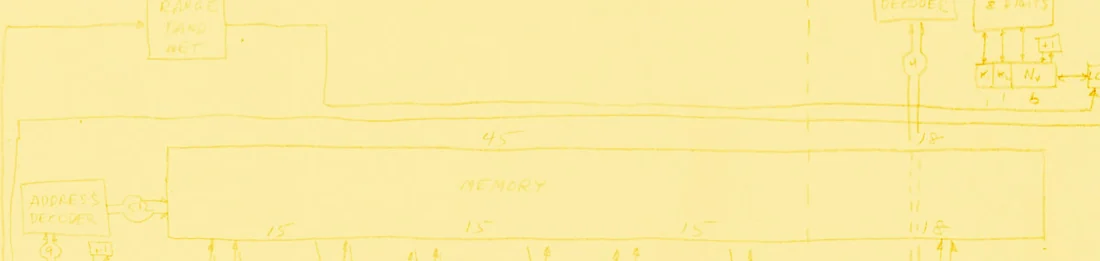
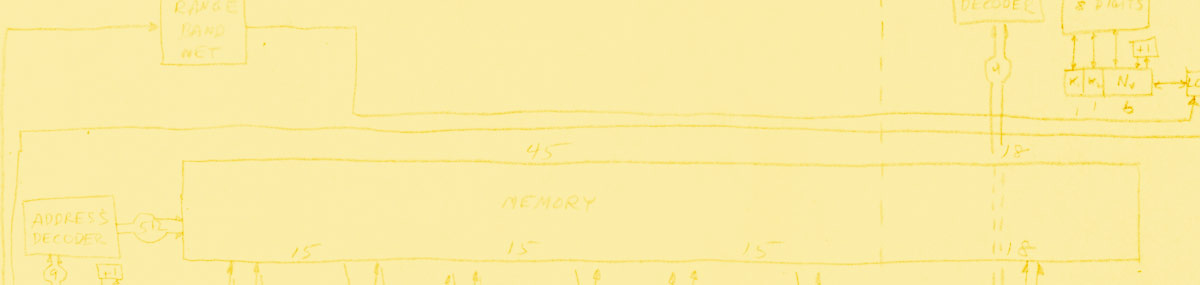
A separate archival document hosted by the Computer History Museum is titled "A proposal to American Research and Development Corporation, 27 May 1957" — the funding pitch Kenneth Olsen and Harlan Anderson's new venture brought to ARD, months before Digital Equipment Corporation was formally organized. The Baker Library page's own list of ARD portfolio companies names Circo Products, High Voltage Engineering, Tracerlab, Baird Associates and Ionics; it does not include DEC, and neither source reviewed here states a dollar return multiple for any ARD investment in DEC. What the two sources jointly establish is ARD's founding structure and purpose in 1946, and DEC's documented approach to ARD as a funding source in 1957, not a verified return figure.
Scope and revision
Both sources are institutional archives describing historical material, not financial disclosures; ARD's SEC filings as a public company, which would carry any audited figure for a DEC stake, were not reviewed here. The widely repeated claim that ARD's roughly $70,000 DEC investment eventually returned several hundred times that amount appears across retellings of the industry's history, but neither source checked here states a specific multiple, and it is treated as attribution rather than archival record.
The decision in front of you
A founder or historian citing ARD as the industry's origin point should separate the archivally confirmed facts — a 1946 founding, a named founding group, a publicly traded closed-end structure, and a documented 1957 approach from DEC — from the return-multiple anecdote that usually accompanies the story. This is an editorial distinction, not a correction of either archive, since neither archive makes the disputed claim in the first place.
- Does a cited account of ARD's DEC return point to an audited or archival figure, or to a retelling of a retelling?
- Does the source distinguish ARD's closed-end, publicly traded structure from the limited-partnership funds that followed it?
- Is a "first venture capital firm" claim being made about ARD itself, or about the fund structure that came later?
The archival record fixes ARD's founding and purpose in 1946, and DEC's own 1957 approach to it for funding; the size of ARD's eventual gain on DEC is a number worth sourcing separately before it is repeated.
Sources & reading trail
HBS Baker Library's own archival account of ARD's 1946 founding, founders, structure and Doriot's stated purpose.
Source published: Not established · Retrieved: 16 September 2026
Computer History Museum's hosted archival document showing DEC's founders' 1957 funding approach to ARD.
Source published: Not established · Retrieved: 16 September 2026
Filings, provider reports and official documents establish the record; the scope reading and the decision framing are Venture Trace editorial analysis. This retrospective draft does not imply the site published on the event date.